
Kia Soul (SK3): Maintenance / Engine oil (Gasoline)
Checking the engine oil level
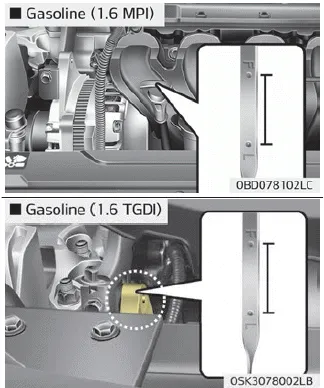
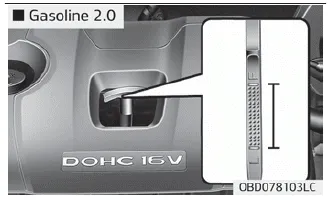
1. Be sure the vehicle is on level ground.
2. Start the engine and allow it to reach normal operating temperature.
WARNING
Radiator hose
Be very careful not to touch the radiator hose when checking or adding the engine oil as it may be hot enough to burn you.
3. Turn the engine off and wait for a few minutes (about 5 minutes) for the oil to return to the oil pan.
4. Pull the dipstick out, wipe it clean, and re-insert it fully.
CAUTION
- Do not overfill the engine oil. It may damage the engine.
- Do not spill engine oil, when adding or changing engine oil. If you drop the engine oil on the engine room, wipe it off immediately.
- When you wipe the oil level gauge, you should wipe it with a clean cloth. When mixed with debris, it can cause engine damage.
5. Pull the dipstick out again and check the level. The level should be between F and L.
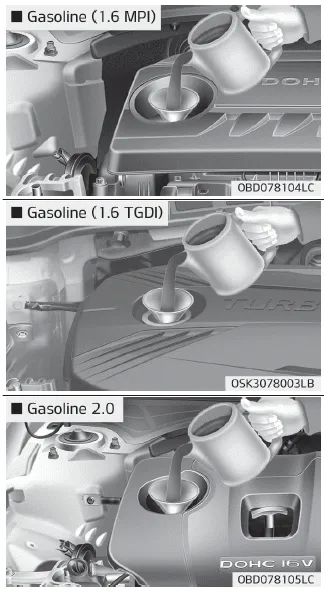
If it is near or at L, add enough oil to bring the level to F. Do not overfill. Use a funnel to help prevent oil from being spilled on engine components.
Use only the specified engine oil. (Refer to “Recommended lubricants and capacities ” on page 9-11.)
Changing the engine oil and filter
Have the engine oil and filter replaced by a professional workshop. Kia recommends to visit an authorized Kia dealer/ service partner.
WARNING
Used engine oil may cause irritation or cancer of the skin if left in contact with the skin for prolonged periods of time. Used engine oil contains chemicals that have caused cancer in laboratory animals. Always protect your skin by washing your hands thoroughly with soap and warm water as soon as possible after handling used oil.
Engine oil and filter The engine oil and filter should be changed at the intervals specified in the maintenance schedule. If the car is being driven in severe conditions, more frequent oil and filter changes are required.
The high-pressure cooling system has a reservoir filled with year-round antifreeze coolant. The reservoir is filled at the factory. Check the antifreeze protection and coolant concentration level at least once a year, at the beginning of the winter season, and before traveling to a colder climate.
Other information:
Kia Soul (SK3) 2020-2025 Owners Manual: Tire rotation
To equalize tread wear, it is recommended that the tires be rotated every 10,000 km (6,500 miles) or 12 months. If irregular wear develops, more frequent tire rotation may be needed. During rotation, check the tires for correct balance. When rotating tires, check for uneven wear and damage.
Kia Soul (SK3) 2020-2025 Owners Manual: Emission control system
The emission control system of your vehicle is covered by a written limited warranty. Please see the warranty information contained in the Warranty & Maintenance book in your vehicle. Your vehicle is equipped with an emission control system to meet all emission regulations.
Categories
- Manuals Home
- Kia Soul Owners Manual
- LCD display modes. User settings mode
- Drive mode integrated control system
- Battery replacement
- New on site
- Most important about car
