
Kia Soul (SK3): Special driving conditions / Driving in the rain, Driving in flooded areas
Driving in the rain
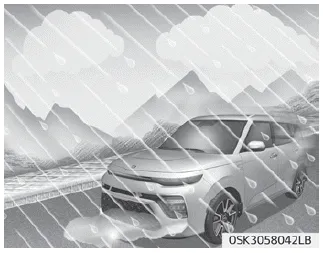
Rain and wet roads can make driving dangerous, especially if you’re not prepared for the slick pavement. Here are a few things to consider when driving in the rain:
- A heavy rainfall will make it harder to see and will increase the distance needed to stop your vehicle, so slow down.
- Keep your windshield wiping equipment in good shape. Replace your windshield wiper blades when they show signs of streaking or missing areas on the windshield.
- If your tires are not in good condition, making a quick stop on wet pavement can cause a skid and possibly lead to an accident. Be sure your tires are in good shape.
- Turn on your headlights to make it easier for others to see you.
- Driving too fast through large puddles can affect your brakes. If you must go through puddles, try to drive through them slowly.
- If you believe you may have gotten your brakes wet, apply them lightly while driving until normal braking operation returns.
Driving in flooded areas
Avoid driving through flooded areas unless you are sure the water is no higher than the bottom of the wheel hub. Drive through any water slowly. Allow adequate stopping distance because brake performance may be affected.
After driving through water, dry the brakes by gently applying them several times while the vehicle is moving slowly.
Smooth cornering Avoid braking or gear changing in corners, especially when roads are wet. Ideally, corners should always be taken under gentle acceleration.
Driving off-road Drive carefully off-road because your vehicle may be damaged by rocks or roots of trees. Become familiar with the off-road conditions where you are going to drive before you begin driving.
Other information:
Kia Soul (SK3) 2020-2025 Owners Manual: If you have a flat tire (with Tire Mobility Kit)
Please read the instructions before using the Tire Mobility Kit. 1. Sealant bottle 2. Compressor The Tire Mobility Kit is a temporary fix to the tire and we recommend that the tire inspected by an authorized Kia dealer as soon as possible. CAUTION One sealant for one tire When two or more tires are flat, do not use the tire mobility kit
Kia Soul (SK3) 2020-2025 Owners Manual: Fuses
❈ Left side : Normal, Right side : Blown A vehicle’s electrical system is protected from electrical overload damage by fuses. This vehicle has 2 (or 3) fuse panels, one located in the driver’s side panel bolster, the others in the engine compartment near the battery.
Categories
- Manuals Home
- Kia Soul Owners Manual
- Maintenance
- What to do in an emergency
- Specifications & Consumer information
- New on site
- Most important about car
