
Kia Soul (SK3): Maintenance / Wiper blades. Blade replacement
Blade inspection
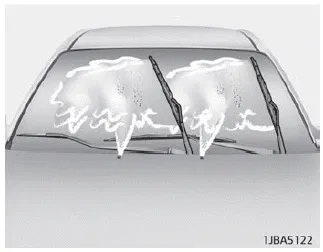
NOTICE
Commercial hot waxes applied by automatic car washes have been known to make the windshield difficult to clean.
Contamination of either the windshield or the wiper blades with foreign matter can reduce the effectiveness of the windshield wipers. Common sources of contamination are insects, tree sap, and hot wax treatments used by some commercial car washes. If the blades are not wiping properly, clean both the window and the blades with a good cleaner or mild detergent, and rinse thoroughly with clean water.
CAUTION
To prevent damage to the wiper blades, do not use gasoline, kerosene, paint thinner, or other solvents on or near them.
Blade replacement
When the wipers no longer clean adequately, the blades may be worn or cracked, and require replacement.
CAUTION
To prevent damage to the wiper arms or other components, do not attempt to move the wipers manually.
CAUTION
The use of a non-specified wiper blade could result in wiper malfunction and failure.
Front windshield wiper blade
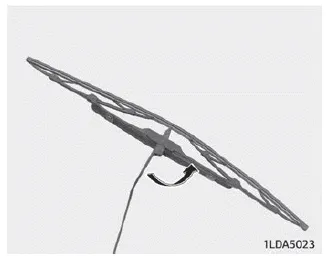
Type A
1. Raise the wiper arm and turn the wiper blade assembly to expose the plastic locking clip.
CAUTION
Do not allow the wiper arm to fall against the windshield, since it may chip or crack the windshield.
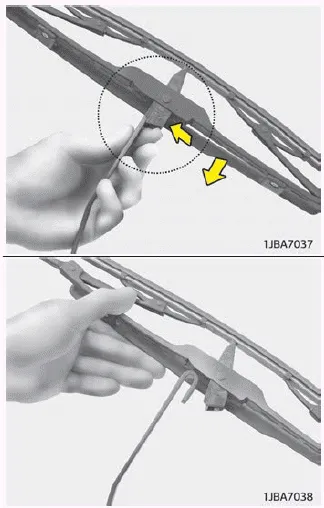
2. Compress the clip and slide the blade assembly downward.
3. Lift it off the arm.
4. Install the blade assembly in the reverse order of removal.
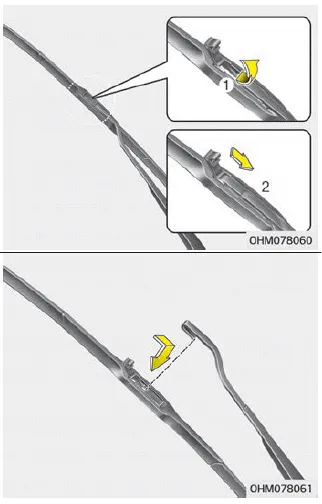
Type B
1. Raise the wiper arm.
2. Lift up the wiper blade clip. Then pull down the blade assembly and remove it.
3. Install the new blade assembly.
4. Return the wiper arm on the windshield.
5. Turn ignition to the ON position and wiper arms will return to the normal operating position.
Rear window wiper blade
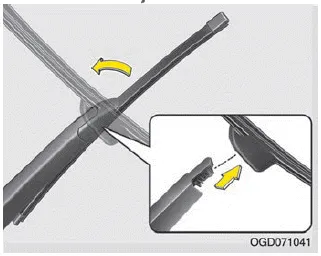
1. Raise the wiper arm and pull out the wiper blade assembly.
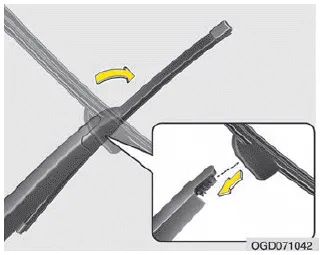
2. Install the new blade assembly by inserting the center part into the slot in the wiper arm until it clicks into place.
3. Make sure the blade assembly is installed firmly by trying to pull it slightly.
To prevent damage to the wiper arms or other components, have the wiper blade replaced by a professional workshop. Kia recommends to visit an authorized Kia dealer/service partner.
Filter inspection If the vehicle is operated in the severely air-polluted cities or on dusty rough roads for a long period, it should be inspected more frequently and replaced earlier.
For best battery service Keep the battery securely mounted. Keep the battery top clean and dry. Keep the terminals and connections clean, tight, and coated with petroleum jelly or terminal grease.
Other information:
Kia Soul (SK3) 2020-2025 Owners Manual: Notes on the safe use of the Tire Mobility Kit
Park your car at the side of the road so that you can work with the TMK away from moving traffic. Place your warning triangle in a prominent place to make passing vehicles aware of your location. To be sure your vehicle will not move, even when you're on fairly level ground, always set your parking brake.
Kia Soul (SK3) 2020-2025 Owners Manual: Climate control air filter
Filter inspection If the vehicle is operated in the severely air-polluted cities or on dusty rough roads for a long period, it should be inspected more frequently and replaced earlier. When you, the owner, replace the climate control air filter, replace it performing the following procedure, and be careful to avoid damaging other components.
Categories
- Manuals Home
- Kia Soul Owners Manual
- Driving your vehicle
- Headlamp and front fog lamp aiming
- Maintenance
- New on site
- Most important about car
