
Kia Soul (SK3): What to do in an emergency / Towing
Towing service
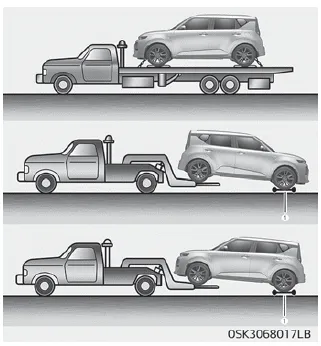
If emergency towing is necessary, we recommend having it done by an authorized Kia dealer or a commercial tow-truck service. Proper lifting and towing procedures are necessary to prevent damage to the vehicle. The use of wheel dollies (1) or flatbed is recommended.
It is acceptable to tow the vehicle with the rear wheels on the ground (without dollies) and the front wheels off the ground.
If any of the loaded wheels or suspension components are damaged or the vehicle is being towed with the front wheels on the ground, use a towing dolly under the front wheels. When being towed by a commercial tow truck and wheel dollies are not used, the front of the vehicle should always be lifted, not the rear.
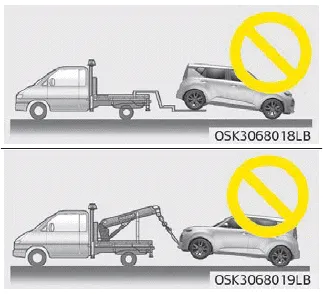
CAUTION
- Do not tow the vehicle backwards with the front wheels on the ground as this may cause damage to the vehicle.
- Do not tow with sling-type equipment. Use wheel lift or flatbed equipment.
When towing your vehicle in an emergency without wheel dollies :
1. Set the ignition switch in the ACC position.
2. Place the transaxle shift lever in N (Neutral).
3. Release the parking brake.
CAUTION
Failure to place the transaxle shift lever in N (Neutral) may cause internal damage to the transaxle.
Park your car at the side of the road so that you can work with the TMK away from moving traffic. Place your warning triangle in a prominent place to make passing vehicles aware of your location.
1. Open the tailgate, and remove the towing hook from the tool case. 2. Remove the hole cover pressing the lower part of the cover on the bumper. 3.
Other information:
Kia Soul (SK3) 2020-2025 Owners Manual: Fuses
❈ Left side : Normal, Right side : Blown A vehicle’s electrical system is protected from electrical overload damage by fuses. This vehicle has 2 (or 3) fuse panels, one located in the driver’s side panel bolster, the others in the engine compartment near the battery.
Kia Soul (SK3) 2020-2025 Owners Manual: Light bulb position (Front)
1. Front turn signal lamp (Bulb Type) 2. Headlamp (Low/High) 3. Position lamp/Daytime running lamp (Bulb Type) 4. Front turn signal lamp (LED Type) 5. Headlamp (LED)/Sub Low 6. Headlamp (LED) (Low) 7. Position lamp/Daytime running lamp (LED Type) 8.
Categories
- Manuals Home
- Kia Soul Owners Manual
- Safety features of your vehicle
- What to do in an emergency
- Headlamp and front fog lamp aiming
- New on site
- Most important about car
